Knee Pain at Night: Why It Happens and How to Stop It
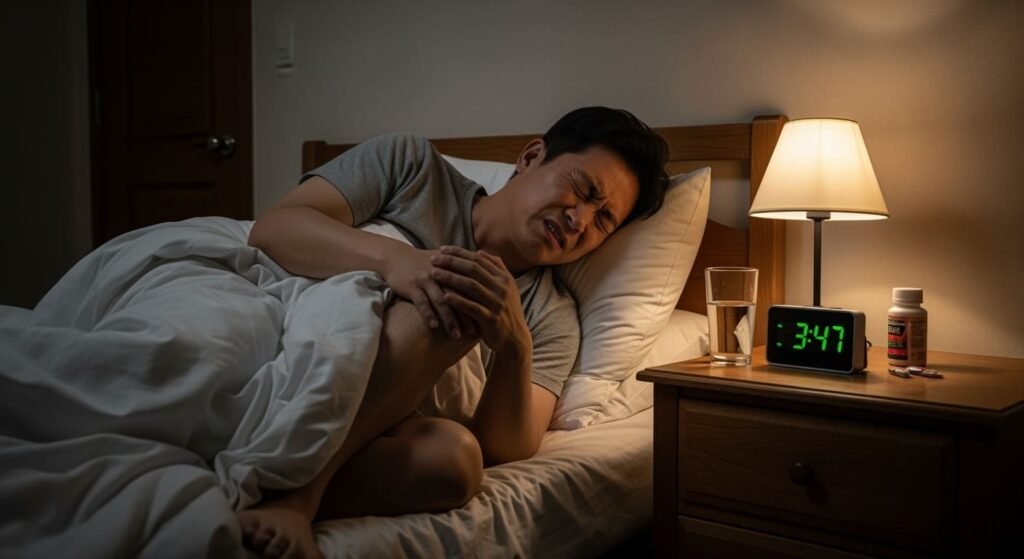
A good night’s sleep is incredibly important for healing your body. However, for many people, bedtime is exactly when their physical discomfort gets the worst. If you have ever been woken up by a deep ache, a sharp sting, or a heavy throbbing in your legs, you know exactly how annoying knee pain at night can be.
During the day, you might be able to ignore a mild ache while you go to work, run errands, or spend time with family. But at night, in the quiet and dark of your bedroom, that exact same ache can feel massive. Whether you are dealing with a dull ache, sharp inner knee pain, or discomfort that shoots down your calf, losing sleep over bad joints drains your energy fast. People actively look for knee pain relief because waking up tired makes dealing with the pain the next day even harder.
Why Do Your Knees Hurt More at Night?
Many patients ask our Ayurvedic doctors, “Why do my knees only hurt when I am trying to sleep?” It is a very common problem, and there are a few simple reasons why your body reacts this way when the sun goes down:
- Your Hormones Drop: Your body makes a natural hormone called cortisol, which helps reduce swelling and inflammation. Cortisol levels are highest in the morning to help you wake up, but they drop lower and lower as the day goes on. By the time you get into bed, your cortisol levels are at their absolute lowest. With fewer natural pain relievers in your blood, the swelling in your knee joints feels much worse.
- Your Joints Dry Out: The fluid inside your knee acts just like oil in a car engine. When you are walking around during the day, this fluid moves around and keeps the joint moving smoothly. When you lie totally still in bed for hours, that fluid stops moving. It settles and gets thick, causing the knee to become stiff, dry, and painful.
- Your Brain Has Nothing Else to Do: During the daytime, your brain is very busy. You are working, talking, or watching television. These distractions push the pain to the back of your mind. At night, when the room is quiet, there is nothing else to distract you. Your brain suddenly focuses entirely on the pain signals coming from your legs.
- Your Body is Trying to Heal: When you sleep, your body goes into repair mode. It sends more blood to damaged tissues to deliver oxygen. In an injured knee, this extra blood flow can cause slight swelling inside the tight joint space, which puts pressure on the nerves and causes a throbbing feeling.
Common Causes of Nighttime Knee Pain
Understanding what is actually causing your pain is the very first step toward finding the right knee pain treatment. Different problems create different types of pain:
1. Osteoarthritis: This is the most common cause of joint pain as people get older. Osteoarthritis happens when the soft, protective cartilage that covers the ends of your bones wears away over the years. This creates painful bone-on-bone rubbing. People with this condition usually feel a deep, heavy ache that gets worse after a busy day and settles deeply into the joint at night.
2. Rheumatoid Arthritis: This is an autoimmune issue where the body’s immune system gets confused and attacks the lining of its own joints. This causes severe heat, swelling, and pain. Because it causes so much swelling, the pain often flares up badly at night and leaves your knees feeling incredibly stiff the next morning.
3. Bursitis and Tendinitis: Your knee is surrounded by tiny fluid sacs that stop friction, and thick cords called tendons that connect your muscles to your bones. Doing the same physical movements over and over can cause these parts to swell up. If you feel sharp knee pain when bending your leg in bed, or if it hurts when the heavy bedsheets press down on your kneecap, you might be dealing with this type of swelling.
4. Baker’s Cyst: If you have a tight, swollen feeling or sharp pain behind knee joints, a Baker’s cyst might be the cause. This is a pocket of extra fluid that builds up at the back of the knee, usually because of arthritis or a torn muscle. The pressure from this pocket of fluid can cause a lot of pain when you try to lie down with your legs completely straight.
5. Bad Sleeping Posture: How you sleep changes how your joints feel. If you sleep on your side, your top leg often drops forward. This twists your hip and pulls your knee joint out of its natural, straight line. Also, your knees pressing hard against each other all night can cause severe inner knee pain.

Simple Ways to Stop the Pain
If you need quick knee pain relief so you can finally get a good night of sleep, there are a few simple changes you can make to your bedtime routine:
1. Fix Your Sleep Position
Keeping your legs straight is very important. If you sleep on your back, put a small, rolled-up towel under your knees. This keeps them slightly bent and takes the pressure off the tight muscles. If you sleep on your side, put a thick, firm pillow right between your knees. This stops your knees from knocking together and keeps your hips perfectly straight.
2. Use Heat or Cold Packs
Temperature changes are very helpful. If your knee feels hot, swollen, and tight (like after a long walk), wrap an ice pack in a towel and put it on your knee for 15 minutes before bed. This numbs the nerves and drops the swelling. If your pain is just a dull, stiff ache, use a warm heating pad or take a warm bath. The heat relaxes the tight muscles and brings soothing blood flow to the joint.
3. Do Gentle Stretches
You should not do heavy workouts right before bed, but doing simple, light exercises for knee pain can make a huge difference. Gentle calf stretches and slowly bending your knee back and forth can release the tight muscle tension from the day. Moving the joint slowly without standing on it helps get the joint fluid moving before you go to sleep.

The Ayurvedic View on Joint Pain
While pillows and ice packs are great for a quick fix, true healing means fixing the actual root cause of the problem. According to Ayurveda, the traditional Indian science of natural healing, bone and joint pain happens when a specific energy in your body called the Vata dosha gets out of balance.
Too much Vata brings dryness and coldness to the body. This extreme dryness dries up the natural lubricating fluid inside your knees. Without enough fluid, the cartilage dries out, leading to heavy friction, swelling, stiffness, and those loud popping sounds you hear when you stand up. Because of this, Ayurvedic knee pain treatment focuses heavily on bringing warmth and oily moisture back into the dry joint to deeply feed the damaged tissues.
Knee Therapy for Pain
This is a classic Ayurvedic Panchakarma treatment. It is a highly specialized knee therapy for pain that gives long-lasting relief without using strong chemical painkillers or undergoing invasive surgery.
What is Janu Basti?
The word Janu means “knee,” and Basti means “to hold inside.” Janu Basti is a natural therapy where very warm, herbal oils are pooled and held directly over your knee joint for a set amount of time.
How is the Treatment Done?
- You lie down comfortably on a massage bed.
- The Ayurvedic therapist makes a thick, sticky dough using black gram flour and water.
- They mold this dough into a thick circle and stick it safely over your painful knee to create a small wall.
- Once the dough is stuck tight, they carefully pour warm, herbal Ayurvedic oil directly into the circle.
- The warm oil sits on your knee for about 30 to 45 minutes. The therapist watches the temperature closely, taking out cool oil and adding fresh, warm oil so the heat stays completely steady.
- After the time is up, the oil and the dough are removed. The therapist will then do a gentle massage and apply herbal steam over the knee to finish the treatment.
Why Does Janu Basti Work So Well?
Janu Basti is not just a basic skin massage. The heavy, steady heat of the oil opens up your skin pores, allowing the strong herbal medicine to sink deep down into the muscles, tendons, and the joint itself.
- It Greases the Joint: The heavy, warm oil directly fights the dry, rough Vata energy. It acts like a natural grease, bringing smooth movement back to dry, creaky knees.
- It Stops Swelling: The specific herbs used in the oil naturally block pain and reduce swelling. The heat brings fresh blood to the area, which washes away trapped toxins and dead cells.
- It Feeds the Tissues: The therapy strengthens the entire knee structure. It feeds the dry cartilage and tight muscles, helping the body repair the damage rather than just hiding the pain.
- It Makes Bending Easy: By relaxing the tight muscles around the knee, Janu Basti makes it much easier to bend your leg. Walking, sitting, and climbing stairs become comfortable again.
Conclusion
Waking up with knee pain every night does not have to be normal. By understanding how your sleep position, your daily habits, and your natural body fluids change when you lie down, you can make simple adjustments to find quick comfort. However, if you want real, long-lasting knee pain relief, using the ancient wisdom of Ayurveda is the smartest path. With good food, simple lifestyle changes, and powerful treatments like Janu Basti, you can stop the dryness, rebuild your joint strength, and finally get the pain-free sleep you deserve.
Do not wait for your joints to get worse. You can easily reach out to the expert Ayurvedic doctors at Svasthvida to get a proper, natural treatment plan built exactly for your body by visiting Svasthvida.
Read More: Shatavari Benefits: Why This Herb Is Great for Women
Frequently Asked Questions
1. Why does my knee pain get worse at night?
At night, your body produces less cortisol, which is a natural pain reliever. Also, lying still causes your joint fluid to settle, making your knees stiff. Without daytime distractions, your brain simply focuses more on the pain.
2. How can I get fast knee pain relief at night?
Adjust your sleep posture by putting a pillow under or between your knees. You can also apply an ice pack for 15 minutes if your knee is swollen, or use a warm heating pad if the joint feels stiff and achy.
3. What is the best sleeping position for inner knee pain?
The best position is sleeping on your back with a small pillow under your knees. If you prefer to sleep on your side, put a thick pillow between your knees to stop them from pressing together and to keep your hips aligned.
4. Can Ayurveda cure osteoarthritis knee pain completely?
While Ayurveda cannot grow back lost cartilage, treatments like Janu Basti are highly effective at stopping further damage. They greatly reduce pain, lower swelling, and help you bend your knees easily again.
5. What are the best exercises for knee pain before bed?
Gentle hamstring and calf stretches are great for releasing tight muscles. Avoid heavy workouts, squats, or running right before bed, as these will trigger inflammation and make your nighttime pain much worse.

Doctor Bhupinder Singh Arora
Founder Of Svasthvida
Svasthvida is an ayurvedic treatment centre run by Doctor Bhupinder Singh Arora, who has passed his Ayurveda M.D. from Bharati Vidyapeeth Deemed University, Pune. He has been practising ayurvedic panchakarma for 16 years. He was an honorary professor & adviser to many famous institutions, X HOD in the panchkarma department SLN Ayurvedic College Amritsar. He got traditional Ayurveda knowledge from many favourite traditions. Many patients in India & abroad benefit from his pulse diagnosis, leech therapy, and panchakarma treatment.
View Profile